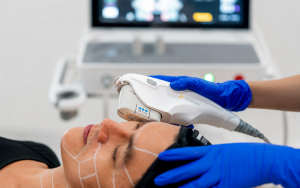
Ultherapy has become a recognised name in non-surgical skin treatments, particularly for people interested in addressing skin laxity and changes in facial definition. With the introduction of Ultherapy PRIME, many people are now asking how the newer system compares with traditional Ultherapy and whether the differences affect their treatment experience.
For those researching Ultherapy PRIME in Sydney, understanding the technology, treatment process and factors involved in choosing a suitable option can help support informed decisions.
At Stasis Laser & Dermal Clinic, we believe treatment selection should be based on individual skin concerns, clinical assessment and realistic expectations. This guide explores the key differences between Ultherapy PRIME and earlier Ultherapy systems, along with important considerations before booking a consultation.
What Is Ultherapy PRIME?
Ultherapy PRIME is a newer generation of the Ultherapy platform. It builds on the established microfocused ultrasound approach while introducing updates to the system’s interface and treatment workflow.
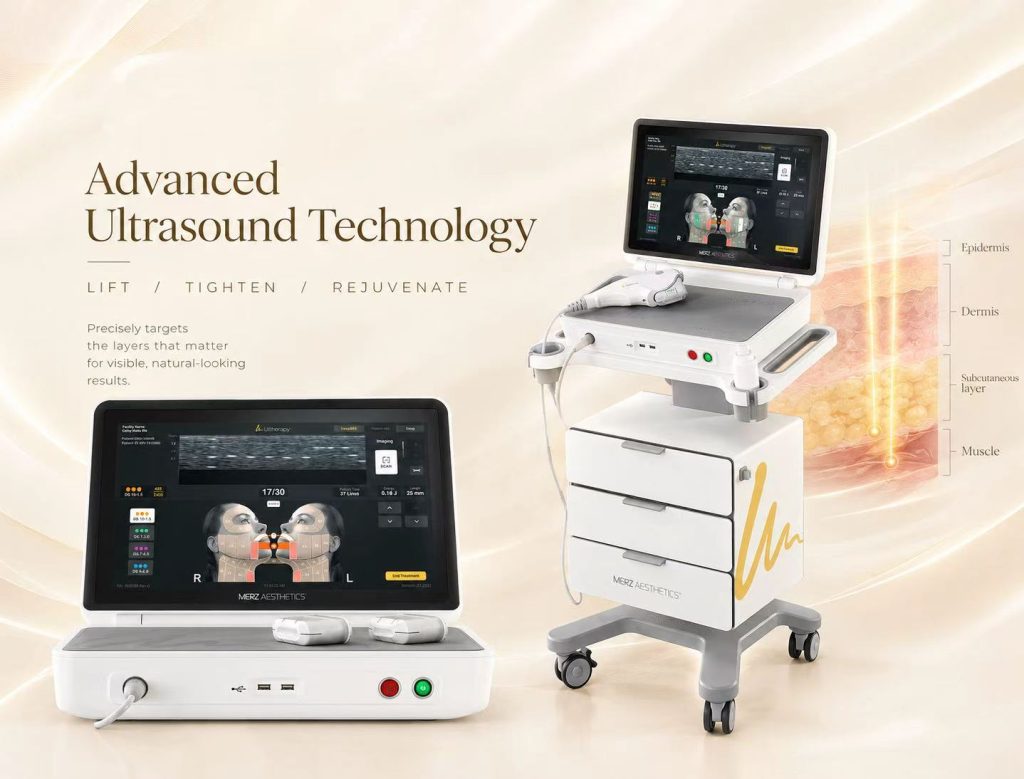
The platform is designed to support practitioners in planning and delivering treatment to selected areas according to the device’s intended use.
For people comparing Ultherapy PRIME vs traditional Ultherapy, it is important to distinguish between changes in the device itself and the potential clinical outcomes of treatment. A newer platform may offer workflow or usability improvements, but this does not automatically mean that every patient will achieve better results.
Individual anatomy, treatment settings, practitioner experience, treatment area and personal response all remain important considerations.
Ultherapy PRIME vs Traditional Ultherapy: Key Differences
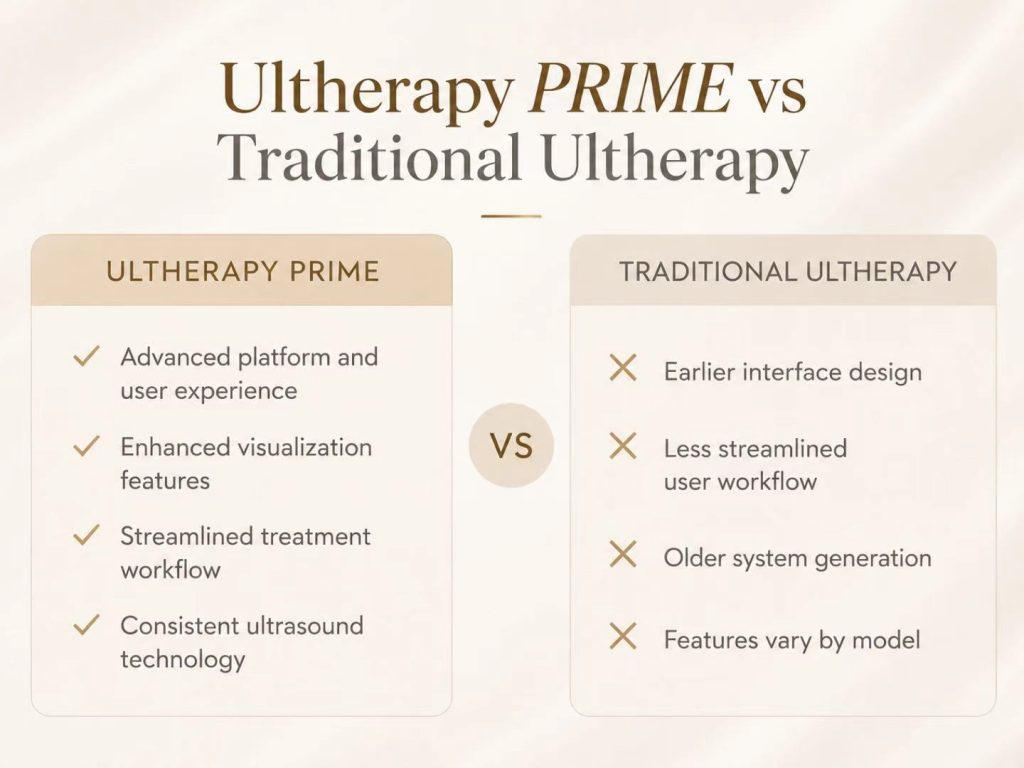
Although both systems are based on microfocused ultrasound technology, there may be differences in their hardware, user interface and workflow.
The specific differences depend on the models being compared. The following areas are useful to discuss when evaluating the two systems.
1. System Design and User Interface
Ultherapy PRIME introduces an updated platform designed to support the practitioner during treatment planning and delivery.
Compared with earlier Ultherapy systems, interface and workflow updates may help practitioners navigate treatment information and manage the treatment process.
However, the exact features available should be confirmed with the clinic, as equipment specifications can vary by model and configuration.
2. Treatment Visualisation
Ultrasound imaging is an important component of the Ultherapy treatment approach. It allows practitioners to view relevant tissue layers during assessment and treatment planning.
Both traditional Ultherapy and Ultherapy PRIME are associated with ultrasound-based visualisation. The precise imaging features and workflow may differ between systems.
Visualisation supports treatment planning, but it does not eliminate treatment risks or guarantee a particular outcome. Appropriate training, clinical judgement and patient selection remain essential.
3. Treatment Workflow and Practitioner Experience
An updated device platform may offer changes to the way practitioners navigate the interface and organise treatment procedures.
These changes may influence workflow within a clinic, although the actual treatment experience depends on several factors, including the treatment area, selected settings and individual sensitivity.
It is important not to assume that a newer system necessarily means a pain-free procedure, shorter treatment time or superior clinical results. Such claims should only be made where supported by reliable evidence for the specific device and circumstances.
4. Treatment Areas
Ultherapy systems may be used for selected areas according to the relevant device’s approved indications and the individual’s suitability.
Areas that may be assessed include parts of the face, jawline, beneath the chin and neck, depending on the device model and applicable indications.
The appropriate treatment area should be determined during consultation rather than selected solely according to a general treatment menu.
For example, concerns about a less defined jawline may be related to skin laxity, facial structure, fat distribution or a combination of factors. An ultrasound-based treatment may not be appropriate for every underlying cause.
5. Potential Treatment Outcomes
Both traditional Ultherapy and Ultherapy PRIME use a microfocused ultrasound approach intended to produce a controlled thermal effect in targeted tissue.
Any visible changes associated with collagen remodelling may develop gradually. The degree of change and the timeframe can vary considerably between individuals.
At present, it is important to avoid assuming that the newer system automatically provides more dramatic, longer-lasting or more predictable results. A meaningful comparison should be based on reliable clinical evidence relevant to the specific devices, treatment protocols and patient groups involved.
A practitioner can explain what may reasonably be expected based on an individual assessment.
Does Ultherapy PRIME Work Differently from Traditional Ultherapy?
At a fundamental level, Ultherapy PRIME and traditional Ultherapy share the microfocused ultrasound treatment approach.
The main distinction is that PRIME is a newer platform with system updates intended to support the treatment workflow. The underlying treatment concept remains focused ultrasound energy delivered to selected tissue depths.
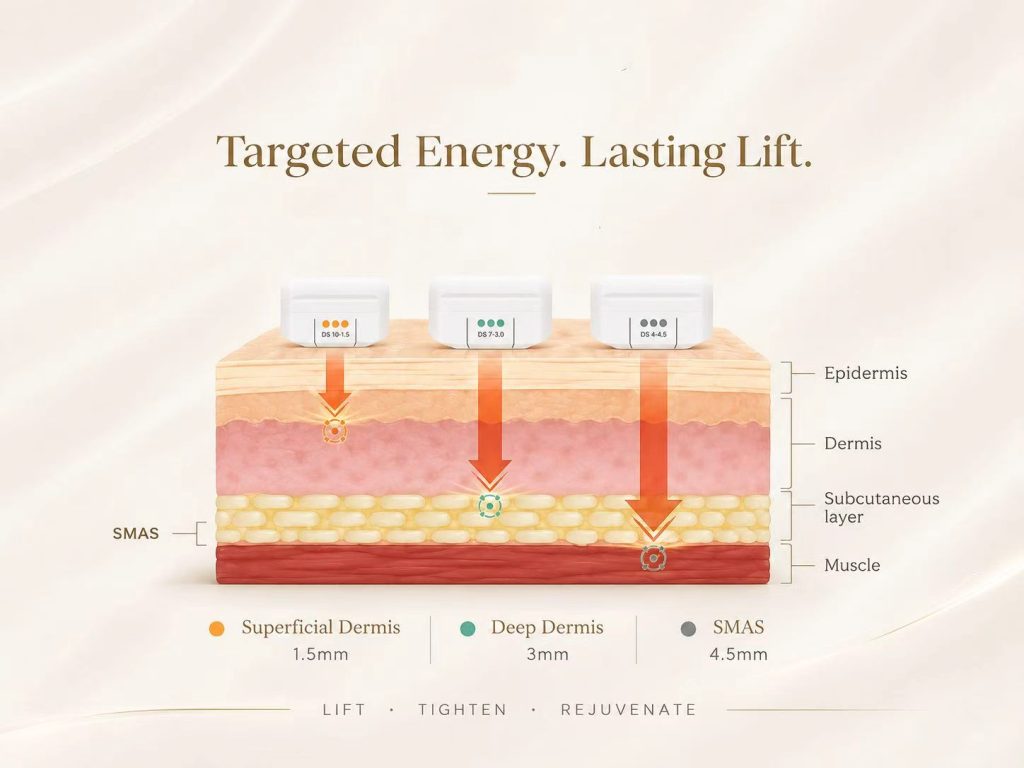
The practical significance of these updates depends on the exact devices being compared and the clinical setting in which they are used.
For patients, the choice of treatment should therefore involve more than comparing device names. It should also consider the practitioner’s training, treatment planning, clinical assessment, potential risks and the suitability of the procedure for the concern being addressed.
Which Areas May Be Considered for Ultherapy PRIME?
For suitable individuals, Ultherapy PRIME may be considered for selected concerns involving the face and neck, subject to the device’s approved indications.
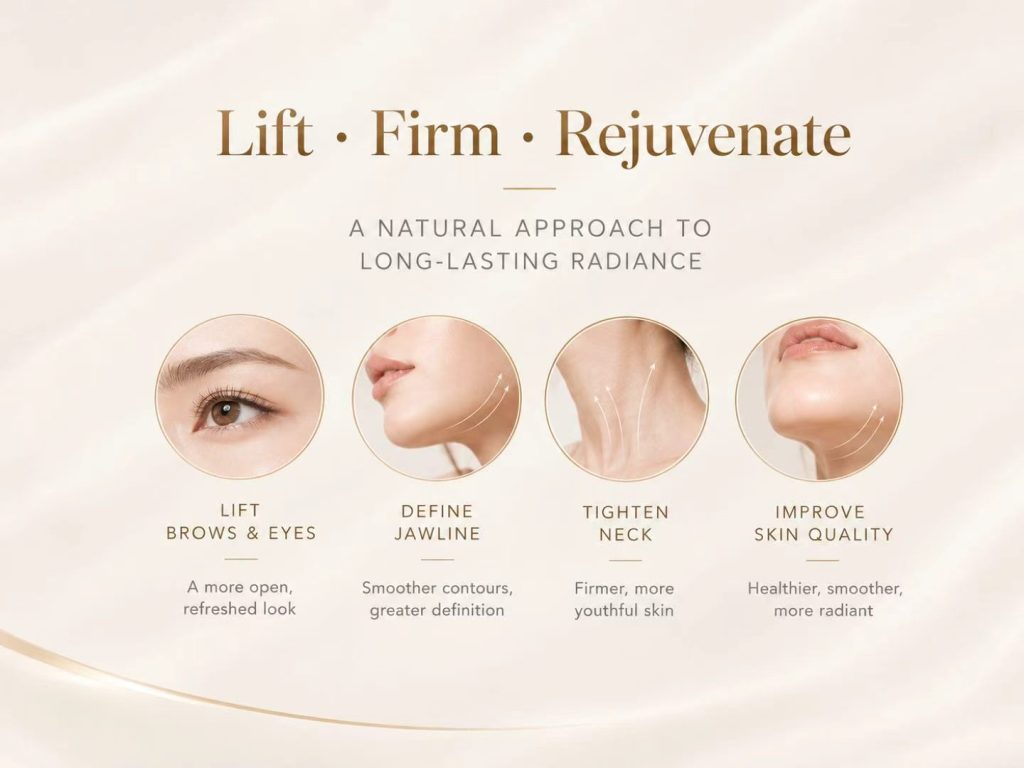
Lower Face and Jawline
Changes in skin elasticity may contribute to a softer appearance around the lower face and jawline.
An assessment can help determine whether skin laxity is a significant factor and whether an ultrasound-based treatment may be appropriate. Facial structure, chin projection and fat distribution can also influence jawline definition.
Neck
The neck is affected by natural ageing, sun exposure and individual skin characteristics.
Some people explore non-surgical treatments when they notice changes in neck skin firmness. However, not every concern in this area is caused by skin laxity, and suitability should be assessed individually.
Beneath the Chin
The appearance of the area beneath the chin can be influenced by several factors, including skin laxity, fat distribution and underlying anatomy.
Ultherapy PRIME should not be regarded as a universal treatment for submental fullness. A practitioner can explain whether the treatment is relevant to the specific concern or whether other options may be more appropriate.
Is Ultherapy PRIME More Comfortable Than Traditional Ultherapy?
Comfort is a common consideration when comparing different generations of treatment devices.
The experience of ultrasound treatment varies according to individual sensitivity, treatment location, energy settings and the number of treatment lines delivered.
Although updates to a device’s interface or workflow may affect the treatment process, they should not automatically be interpreted as proof that the procedure is less uncomfortable.
Before treatment, patients should discuss pain management options, expected sensations and the steps available if they experience significant discomfort.
The practitioner should also explain potential side effects and what to expect during recovery.
Are the Results of Ultherapy PRIME Better or Longer-Lasting?
A newer device generation does not, by itself, establish that results will be better or last longer.
Treatment outcomes depend on factors such as skin condition, age-related changes, anatomy, treatment planning and the individual’s biological response.
Ultherapy-based treatments may produce gradual changes associated with tissue response and collagen remodelling. However, the extent of visible change is not the same for everyone, and no particular outcome or duration can be guaranteed.
When comparing Ultherapy PRIME with an earlier system, ask the clinic whether there is reliable evidence supporting any specific claims about differences in clinical outcomes.
A personalised consultation is the most appropriate way to discuss expected benefits and limitations in the context of your own concerns.
Is There Downtime After Ultherapy PRIME?
Ultherapy PRIME is a non-surgical treatment, but non-surgical does not mean risk-free or completely free of recovery effects.
Some individuals may experience temporary redness, swelling, tenderness or discomfort following treatment. Other side effects may occur, and less common but more significant complications are possible.
Recovery varies depending on the individual and the treatment performed. Your practitioner should explain the relevant risks, aftercare instructions and when to seek medical advice if symptoms occur.
A suitable treatment plan should also account for medical history, previous procedures and any factors that may affect safety.
How to Choose Between Ultherapy PRIME and Traditional Ultherapy in Sydney

If you are considering Ultherapy in Sydney, choosing a treatment should involve a review of both the technology and the clinical service being offered.
Before making a decision, consider the following questions:
- Which device will be used? Ask for the exact model and confirm whether the clinic is offering Ultherapy PRIME or an earlier Ultherapy system.
- What is the intended treatment area? Confirm that the proposed area is appropriate for the specific device and your individual circumstances.
- What evidence supports the expected outcome? Ask about realistic results, limitations and whether claims of improved performance are supported by reliable evidence.
- Who will perform the treatment? Discuss the practitioner’s qualifications, relevant training and experience.
- What are the risks and aftercare requirements? Understand the potential side effects, recovery considerations and follow-up arrangements.
- What is included in the quoted price? Clarify the treatment areas, proposed protocol and any additional costs before proceeding.
A more recent device may offer practical advantages, but the overall quality of assessment and treatment planning remains important.
Ultherapy PRIME at Stasis Laser & Dermal Clinic
At Stasis Laser & Dermal Clinic, we understand that every individual has different skin concerns, treatment goals and expectations.
If you are researching Ultherapy PRIME or comparing it with traditional Ultherapy, a consultation can help clarify the differences between the available options and whether an ultrasound-based treatment may be suitable for you.
Our approach focuses on understanding your concerns, discussing appropriate treatment options and explaining potential benefits, limitations, risks and aftercare.


Rather than assuming that one device is suitable for everyone, we encourage informed decisions based on individual assessment and realistic expectations.
If you would like to learn more about Ultherapy PRIME in Sydney, contact Stasis Laser & Dermal Clinic to enquire about a consultation.
How can I find Ultherapy PRIME in Sydney?

You can contact Stasis Laser & Dermal Clinic to enquire about the available treatment options, the device used and whether a consultation is appropriate for your concerns.
Treatment suitability, potential benefits, risks and aftercare should be discussed with an appropriately qualified practitioner. Results vary between individuals. Device features and approved indications should be verified for the specific system offered.
If you are comparing Ultherapy PRIME with traditional Ultherapy and would like to understand which option may be appropriate for your skin concerns, contact Stasis Laser & Dermal Clinic to arrange an enquiry.
An individual assessment can help you understand the available options and make an informed decision.