Published by Stasis Laser & Dermal Clinic, Haymarket Sydney CBD
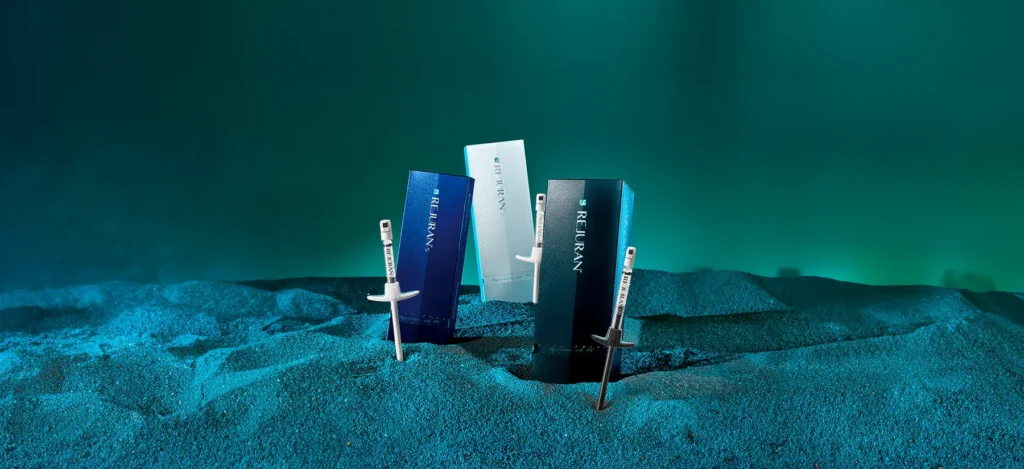
Over the past couple of years, a particular category of skin treatment has been generating genuine interest among Sydney patients who want to address skin quality — not just surface concerns like pigmentation or texture, but the overall health, resilience, and vitality of the skin itself. That category is polynucleotide therapy, and the name most commonly associated with it in Australia right now is Rejuran.
If you have been curious about what Rejuran actually is, how it works, who it suits, and whether it might be appropriate for your skin, this article is designed to give you a clear, honest overview. Understanding a treatment before you discuss it with a qualified practitioner is always a sensible starting point.
Please note: Rejuran is a prescription-only injectable treatment in Australia. All information in this article is educational in nature. Individual suitability is assessed at a clinical consultation with a qualified medical practitioner.
What Is Rejuran?
Rejuran is an injectable skin treatment developed in South Korea that contains polynucleotides (PN) — highly purified DNA fragments derived from wild salmon. Launched in Korea in 2014, Rejuran was initially used across Asian countries such as Korea and Singapore before being approved in Australia in July 2023.
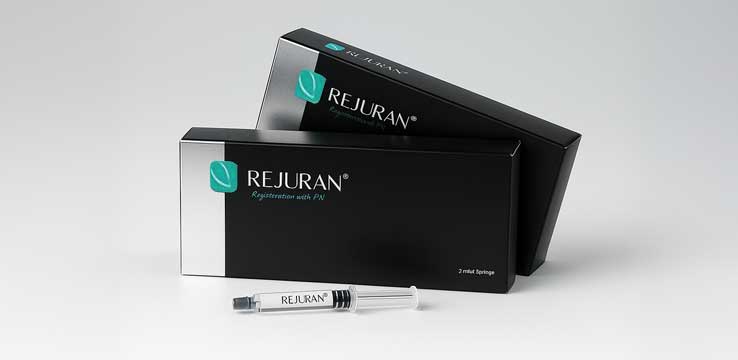
The polynucleotides in Rejuran provide the building blocks that may help support collagen and elastin production in the skin — proteins that help maintain skin structure and elasticity.
What distinguishes Rejuran from other injectables is its mechanism. Rather than adding volume, hydration, or structure from the outside in — as hyaluronic acid-based treatments do — Rejuran is designed to support the skin’s own regenerative processes from within. It targets the biological environment of the skin, encouraging the cells responsible for collagen production (fibroblasts) to become more active.
The result, for suitable patients over the course of a treatment plan, may be skin that feels and appears healthier, more resilient, and better hydrated — with improvements in texture, fine lines, pore appearance, and overall skin quality.
How Does Rejuran Work?
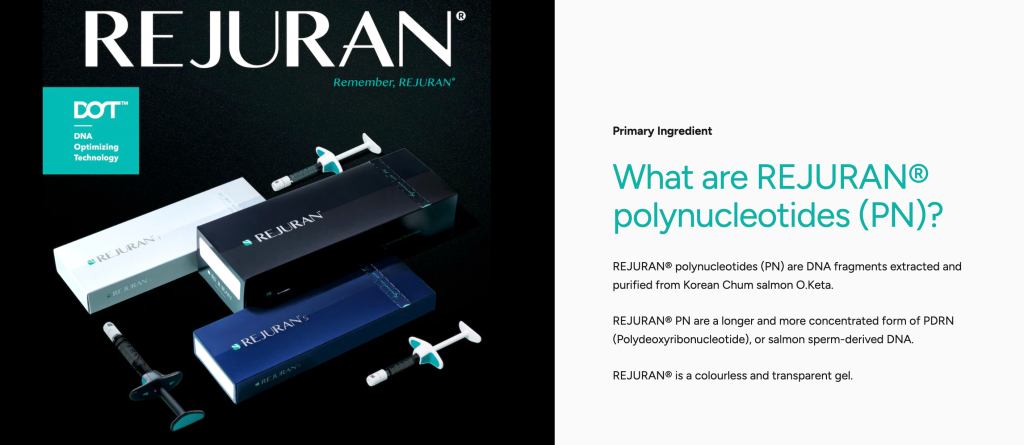
The active ingredient in Rejuran is polynucleotide (PN) — a more concentrated form of PDRN (Polydeoxyribonucleotide). Rejuran PN is derived from wild salmon, specifically Korean Chum Salmon (O. keta), which has a DNA base composition very similar to that of humans, making it highly biocompatible.
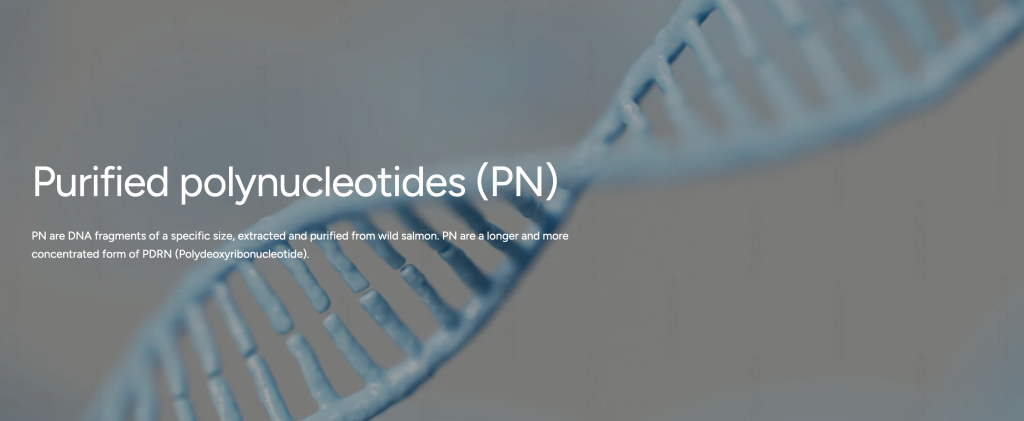
When administered by a qualified practitioner into the upper layers of the skin, the polynucleotides interact with the skin’s tissue environment in several ways:
Supporting Collagen and Elastin Production The polynucleotides stimulate fibroblast activity — these are the cells in the dermis responsible for producing collagen and elastin. Over time, increased fibroblast activity may contribute to improved skin firmness, elasticity, and texture.
Promoting Tissue Repair PDRN is known for its regenerative properties and has been used in skin repair applications. It contributes to DNA formation, which may support tissue regeneration and wound healing processes. In the context of aesthetic skin treatment, this biological activity may support recovery from environmental damage, acne scarring, and the general wear that accumulates over time.
Improving the Skin’s Moisture Environment Polynucleotides may also support the skin’s capacity to retain moisture, which can contribute to improved hydration levels and a more supple skin texture — though Rejuran is not primarily a hydrating injectable in the way that hyaluronic acid-based products are.
Anti-Inflammatory Properties Research into PDRN and PN technology suggests these molecules may have anti-inflammatory properties, which could be relevant for patients with reactive, sensitive, or redness-prone skin.
What Skin Concerns Might Rejuran Address?
Rejuran is not a treatment designed to change the structure or volume of the face. It is focused on skin quality — the intrinsic health and condition of the skin itself. Based on clinical use and the published literature around polynucleotide therapy, it is generally discussed in relation to:
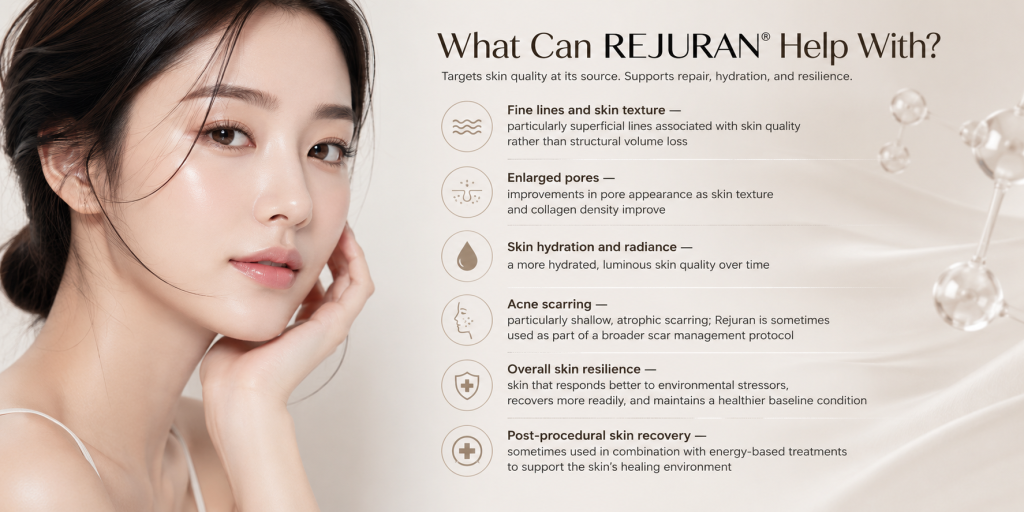
- Fine lines and skin texture — particularly superficial lines associated with skin quality rather than structural volume loss
- Enlarged pores — improvements in pore appearance as skin texture and collagen density improve
- Skin hydration and radiance — a more hydrated, luminous skin quality over time
- Acne scarring — particularly shallow, atrophic scarring; Rejuran is sometimes used as part of a broader scar management protocol
- Overall skin resilience — skin that responds better to environmental stressors, recovers more readily, and maintains a healthier baseline condition
- Post-procedural skin recovery — sometimes used in combination with energy-based treatments to support the skin’s healing environment
It is important to have realistic expectations: Rejuran is not designed to address significant skin laxity, deep structural ageing changes, or volume loss. These concerns are better suited to other treatment modalities, and a qualified practitioner will advise on the most appropriate approach for your individual presentation.
Who Might Be Suitable for Rejuran?
Rejuran is a prescription injectable treatment. Suitability is assessed individually at a clinical consultation, and your practitioner will take a detailed medical history and skin assessment before recommending whether it is appropriate for you.
That said, polynucleotide therapy is generally discussed as a consideration for patients who:
- Are focused on improving overall skin quality rather than changing facial structure or adding volume
- Have concerns about skin texture, fine lines, or enlarged pores that are related to skin health rather than structural changes
- Are interested in a gradual, biological approach to skin improvement that works with the body’s own processes
- Have sensitive or reactive skin and are looking for a treatment with a gentler mechanism than some energy-based alternatives
- Are dealing with mild acne scarring and want to explore treatment options as part of a broader plan
- Want to complement other treatments — Rejuran is sometimes used alongside energy-based treatments, skin boosters, or other modalities as part of a personalised skin programme
Rejuran is not appropriate for everyone. Your practitioner will advise on contraindications, including known salmon or fish allergy, pregnancy and breastfeeding, certain autoimmune conditions, and other factors relevant to your individual health profile.
Why Is Rejuran Gaining Interest in Sydney?
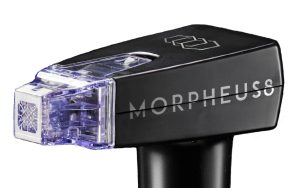
Sydney’s skin concerns have a particular character. Years of high UV exposure contribute to a pattern of photoageing that includes not just pigmentation and vascular changes, but a deterioration in overall skin quality — reduced density, impaired barrier function, and loss of the luminosity that characterises genuinely healthy skin. Energy-based treatments like Alma Harmony, Morpheus8, and PicoSure Pro address many of the visible signs of this damage, but there is growing patient interest in treatments that also support the biological health of the skin from within.
Rejuran occupies a distinct space in that conversation. It is not a replacement for energy-based rejuvenation, and it is not a structural injectable. It sits in its own category — a biologically active treatment that may support the skin’s capacity to repair, regenerate, and maintain a healthier baseline over time.
Sydney is also home to a substantial population of patients from East Asian, South-East Asian, and other cultural backgrounds for whom polynucleotide therapy has been established clinical practice for many years — first in South Korea and subsequently across much of Asia. For many of these patients, Rejuran is not a novel concept; it is a familiar and trusted approach to skin health that they are pleased to find available in Australia.
Rejuran and Combination Treatments
Rejuran is often used as part of a broader skin programme rather than as a standalone treatment. At Stasis Clinic, our practitioners may discuss how polynucleotide therapy could complement:
Energy-Based Rejuvenation (Alma Harmony, PicoSure Pro, Morpheus8) Energy treatments address pigmentation, vascular concerns, texture, and skin laxity. Polynucleotide therapy may support the skin’s biological environment during and after a course of energy treatments, potentially supporting recovery and long-term skin health.
Skin Tightening Treatments (Thermage FLX, Ultherapy Prime) For patients primarily concerned with skin laxity and structural lifting, skin quality treatments like Rejuran may be considered alongside structural modalities to address both the quality and firmness of the skin.
HydraFacial and Topical Skin Care The foundation of skin health — cleansing, hydration, antioxidant support, and broad-spectrum sun protection — supports and prolongs the outcomes of all injectable and energy-based treatments.
Your practitioner will recommend the combination most appropriate to your skin and goals.
Why Choose Stasis Laser & Dermal Clinic for Alma Harmony in Sydney?
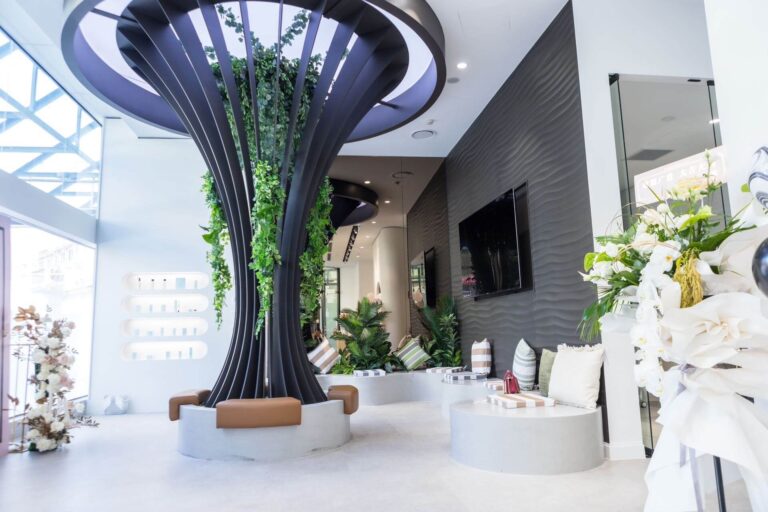
Located in the heart of Haymarket, Sydney CBD, Stasis Laser & Dermal Clinic provides advanced aesthetic treatments using evidence-based technology and personalised care.
Why patients choose Stasis:
- Genuine Ultherapy Prime technology
- Experienced practitioners
- Personalised treatment planning
- Sydney CBD location
- Free parking available
- Open 7 days a week
- Expertise across all skin types
Our goal is to help patients achieve natural-looking, long-lasting skin tightening results through safe and effective treatment protocols.
Book Your Rejuran Consultation in Sydney CBD
If you’re considering non-surgical skin tightening and would like to learn whether Ultherapy Prime is right for you, we invite you to schedule a consultation with our experienced team.
Stasis Laser & Dermal Clinic
G02, 695–699 George Street, Haymarket NSW 2000
Phone: 02 9211 0282
Mobile: +61 426 575 666
Email: customerservice@stasisclinic.com
Opening Hours: Monday – Sunday, 10:00AM – 7:00PM
Free Parking Available