the Appearance of Enlarged Pores?
Uneven skin texture and enlarged pores are common skin concerns that can affect the overall appearance of the complexion. Pores are a natural part of the skin, but they may appear more noticeable when there is excess oil production, reduced skin elasticity, congestion or changes in the surrounding skin structure.

Morpheus8 is a radiofrequency (RF) microneedling treatment that combines microneedling with radiofrequency energy delivered into the skin at controlled depths. It is designed to address selected concerns relating to skin texture and firmness.
But can Morpheus8 improve skin texture and the appearance of enlarged pores? Understanding how the treatment works, what it may help with and its limitations can help you make a more informed decision.
At Stasis Laser & Dermal Clinic, treatment suitability should be assessed individually, taking into account skin condition, treatment goals and relevant medical history.
What Causes Uneven Skin Texture and Enlarged Pores?
Before considering a treatment, it is important to understand why pores may appear enlarged and what can contribute to uneven skin texture.
Several factors can influence the appearance of the skin.
1. Excess Sebum Production
Sebum is the natural oil produced by the sebaceous glands. When oil production is higher, pores may become more noticeable, particularly in areas such as the nose, forehead and cheeks.
Oil and dead skin cells can also accumulate within pores, contributing to congestion and an uneven-looking complexion.
2. Reduced Skin Elasticity
As skin changes over time, its collagen and elastin structure may become less supportive. This can affect skin firmness and the appearance of pores, making them look more prominent in some areas.
Changes in skin elasticity may also contribute to a less smooth-looking surface.
3. Acne and Post-Acne Skin Changes
Previous acne breakouts can leave behind uneven texture, visible pores and different types of acne scarring.
However, enlarged pores and acne scars are not the same concern. Their underlying causes differ, so they may require different treatment approaches.
4. Sun Exposure and Skin Ageing
Cumulative sun exposure can contribute to changes in skin texture, pigmentation and elasticity. Over time, these changes may affect how smooth and even the complexion appears.
Genetics, skin type and individual skin characteristics can also influence pore visibility.
Understanding these factors is important because no single treatment addresses every cause of enlarged pores or uneven skin texture.
How Does Morpheus8 Work?
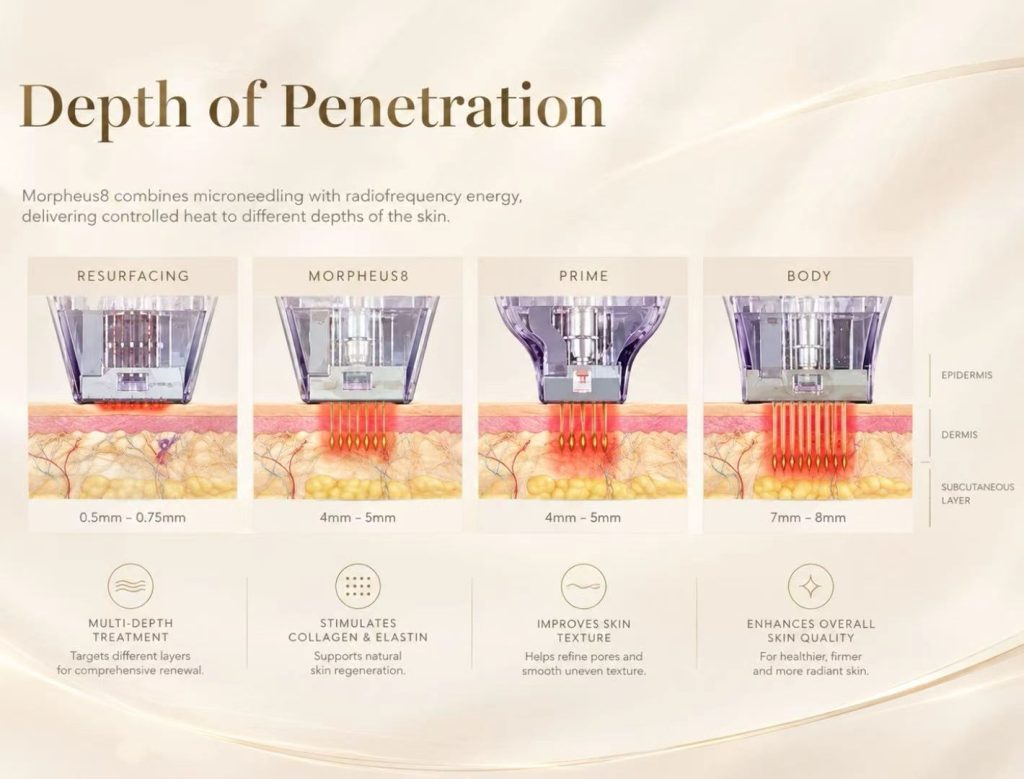
Morpheus8 is a fractional radiofrequency microneedling treatment that uses fine needles to deliver radiofrequency energy into targeted layers of the skin.
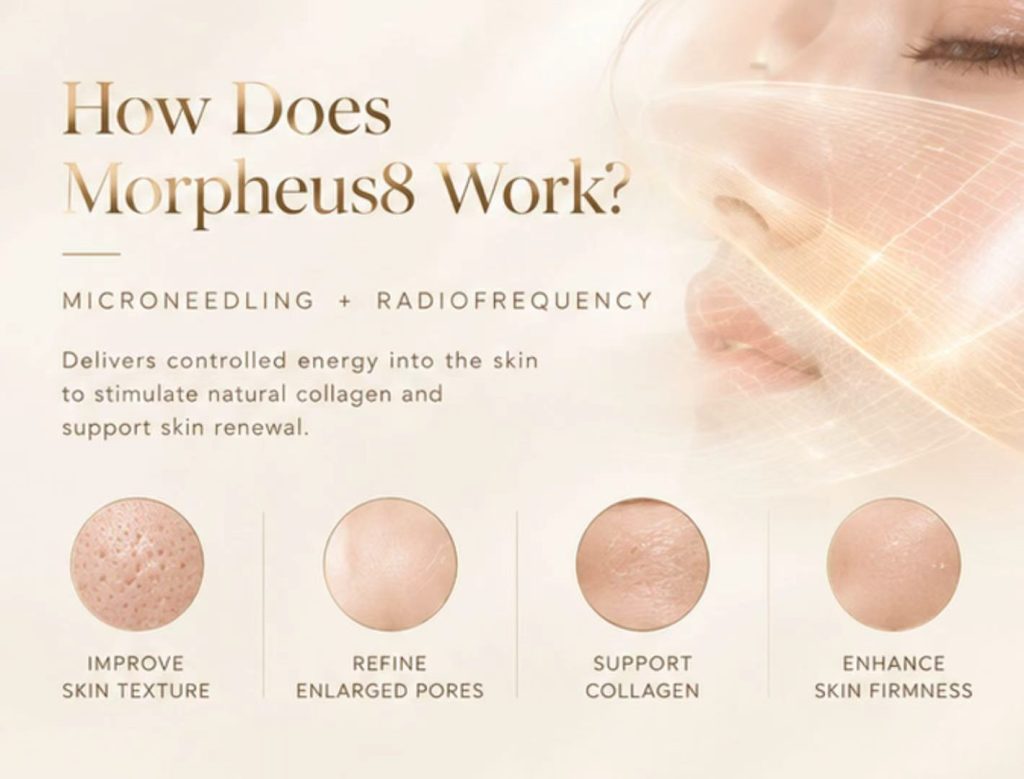
The microneedles create controlled micro-injuries, while the radiofrequency energy generates heat within the treated tissue. These processes stimulate the skin’s natural repair response and can support collagen remodelling.
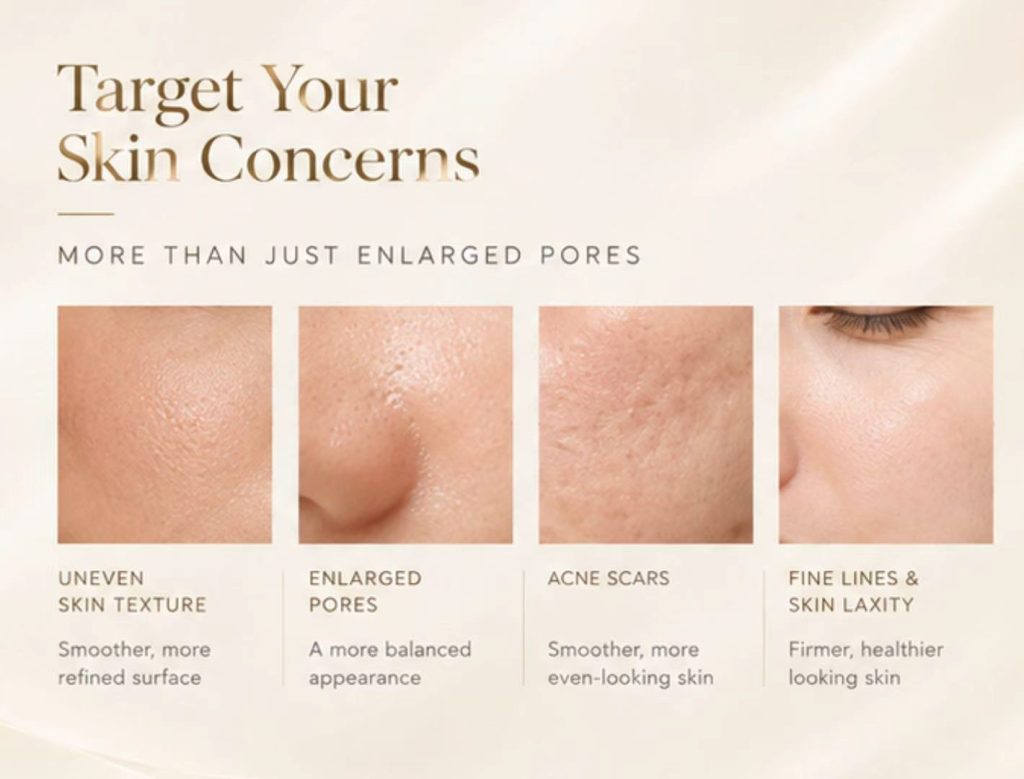
Depending on the treatment settings and individual suitability, Morpheus8 may be considered for concerns such as:
- Uneven skin texture
- The appearance of enlarged pores
- Selected types of acne scarring
- Mild skin laxity
- Fine lines and changes in skin firmness
Treatment depth, energy settings and technique are important considerations. They should be selected by a suitably qualified practitioner according to the treatment area, skin characteristics and individual risk factors.
Morpheus8 is not a universal solution for every skin concern, and the degree of visible change can vary between individuals.
Can Morpheus8 Improve the Appearance of Enlarged Pores?
Morpheus8 may help improve the appearance of enlarged pores in some individuals, particularly when pore visibility is associated with changes in skin texture or reduced skin support.
The treatment’s radiofrequency energy and microneedling action are intended to stimulate tissue remodelling. As the skin repairs itself, changes in texture and firmness may contribute to a smoother-looking complexion.
However, it is important to understand that Morpheus8 does not permanently close or eliminate pores. Pores are normal skin structures, and their size and visibility are influenced by multiple factors, including genetics and sebum production.
If enlarged pores are mainly associated with excess oil, congestion or comedones, a treatment focused on skin cleansing, oil management or other appropriate skincare approaches may also be relevant.
For this reason, an individual assessment is important before choosing Morpheus8 specifically for enlarged pores.
Can Morpheus8 Improve Overall Skin Texture?
Skin texture can refer to several different concerns, including roughness, uneven skin surfaces, visible pores and certain types of acne scarring.
Morpheus8 may be considered when the primary concern involves texture changes that could benefit from controlled skin remodelling.
Uneven or Rough Skin Texture
The treatment stimulates a wound-healing response and collagen remodelling. Over time, this may contribute to changes in the smoothness and overall appearance of the treated skin.
The outcome depends on the original skin condition, treatment settings and individual healing response.
Acne Scarring
Morpheus8 may be considered for selected types of atrophic acne scars, which are depressions in the skin left by previous acne.
Different acne scars have different structures and depths. Some may respond better to other procedures or a combination of treatments.
Active inflammatory acne should be assessed before treatment, as performing procedures on unsuitable skin may increase the risk of irritation or complications.
Skin Firmness
Where mild skin laxity contributes to an uneven-looking surface, radiofrequency microneedling may be considered as part of an individualised treatment plan.
However, Morpheus8 is not equivalent to surgical lifting, and it cannot guarantee a particular degree of tightening or textural improvement.
How Many Morpheus8 Sessions May Be Needed?
The number of Morpheus8 sessions depends on the skin concern, its severity, the treatment area and the individual’s response.
Some people may be assessed for a single treatment, while others may be advised to consider a course of treatments. There is no fixed number of sessions that is appropriate for everyone.
A qualified practitioner should assess the skin and discuss realistic treatment goals before recommending a schedule.
It is also important to allow sufficient recovery time between sessions. Treatment intervals should be determined according to the device protocol, treatment intensity and individual healing response rather than following a one-size-fits-all schedule.
When Can You Expect to See Changes?
Morpheus8 initiates a skin repair response, and collagen remodelling takes time.
Immediately after treatment, the skin may appear red, swollen or temporarily uneven due to the normal post-procedure response. These early changes should not be confused with the final treatment outcome.
Any improvement in skin texture or firmness generally develops gradually over the following weeks to months. The timing and extent of visible changes vary depending on the treatment performed and individual healing.
It is important not to judge the final result while the skin is still recovering.
What Is the Recovery Period After Morpheus8?
Recovery following Morpheus8 varies according to treatment depth, energy settings, treatment area and individual skin sensitivity.
Common temporary effects may include:
- Redness and swelling
- Tenderness or sensitivity
- Small pinpoint marks
- Temporary roughness or dryness
- Mild bruising or other local skin reactions
Some people experience only short-lived effects, while others may need a longer recovery period. More significant complications, including burns, infection, scarring and changes in pigmentation, are possible.
Appropriate aftercare is important. Patients should follow the treating practitioner’s instructions, use suitable gentle skincare and protect the skin from sun exposure during recovery.
Avoid introducing potentially irritating active skincare ingredients or resuming intensive skin treatments until the skin has recovered sufficiently and the practitioner advises that it is appropriate.
Is Morpheus8 Suitable for Every Skin Type?
Morpheus8 may be considered for a range of skin types, but suitability cannot be determined by skin type alone.
Skin tone, previous pigmentation changes, current skin conditions, medical history and the planned treatment settings all influence the risk assessment.
Radiofrequency microneedling can cause post-inflammatory hyperpigmentation in some individuals, particularly when the skin is irritated or injured. Careful assessment and appropriate treatment parameters are therefore important.
Treatment may need to be postponed or avoided in certain circumstances, including some active skin infections or inflammatory conditions. Other medical factors, medications and healing concerns should also be reviewed before proceeding.
A consultation should establish whether Morpheus8 is appropriate or whether another approach would better suit the individual’s concerns and risk profile.
Morpheus8 vs Other Treatments for Enlarged Pores
Different treatments target different contributing factors. The most suitable option depends on whether the concern relates primarily to oil production, congestion, acne scarring, skin texture or reduced elasticity.
Morpheus8: Radiofrequency microneedling may be considered when uneven texture, selected acne scars or mild skin laxity are part of the concern.
Professional skin treatments: Treatments selected for congestion and excess oil may be more relevant when blocked pores are the main issue.
Topical skincare: Appropriate skincare ingredients, such as retinoids or salicylic acid where suitable, may help manage certain causes of congestion and uneven texture. Their suitability depends on skin sensitivity, medical history and other factors.
Other resurfacing procedures: Certain laser or resurfacing treatments may be considered for selected textural concerns. The appropriate option depends on the skin condition, expected recovery and individual risk factors.
These approaches are not interchangeable, and combining treatments is not always necessary or appropriate. A personalised assessment can help determine which option best matches the underlying concern.
How to Prepare for a Morpheus8 Consultation
Before undergoing Morpheus8, it is helpful to discuss the following points with your practitioner:
- Your main concern, such as visible pores, rough texture or acne scarring.
- Your current skincare routine and any recent cosmetic treatments.
- Any history of pigmentation, scarring or delayed wound healing.
- Relevant medical conditions and medications.
- Your expected results, recovery requirements and tolerance for treatment-related risks.
A thorough consultation should include an assessment of the skin, a discussion of realistic outcomes and an explanation of potential side effects.
The aim is not simply to select a popular treatment, but to determine whether the treatment is appropriate for the individual’s skin and goals.
Considering Morpheus8 at Stasis Laser & Dermal Clinic
If you are concerned about enlarged pores, uneven skin texture or selected acne scars, Morpheus8 may be one option worth discussing with a qualified practitioner.
At Stasis Laser & Dermal Clinic, an individual assessment can help identify the factors contributing to your skin concerns and determine whether radiofrequency microneedling or another approach may be suitable.
The most appropriate treatment depends on your skin condition, medical history, treatment expectations and individual risk factors. Results are not guaranteed, and more than one approach may need to be considered.
To learn whether Morpheus8 may be suitable for your skin, contact Stasis Laser & Dermal Clinic to arrange a consultation.